Culture
The Ethiopian Coffee Guide: Regions, Roasts and the Ceremony
12 min read · Updated July 2026
Yirgacheffe, Guji, Sidama, Harrar and Limu — how Ethiopia's growing regions taste, and what actually happens during a coffee ceremony.
Coffee's origin, not a marketing claim
Arabica originates in Ethiopia's southwestern forests, and wild coffee still grows there. That heritage matters practically: Ethiopia has thousands of landrace varieties, which is why its coffees taste unlike anywhere else.
The regions in one paragraph each
Yirgacheffe: floral, citric, tea-like. Guji: intense stone fruit and florals. Sidama: balanced, berry-leaning. Harrar: natural-processed, blueberry and spice. Limu: rounded, winey, lower acidity. Washed lots read cleaner; naturals read fruitier.
The ceremony, step by step
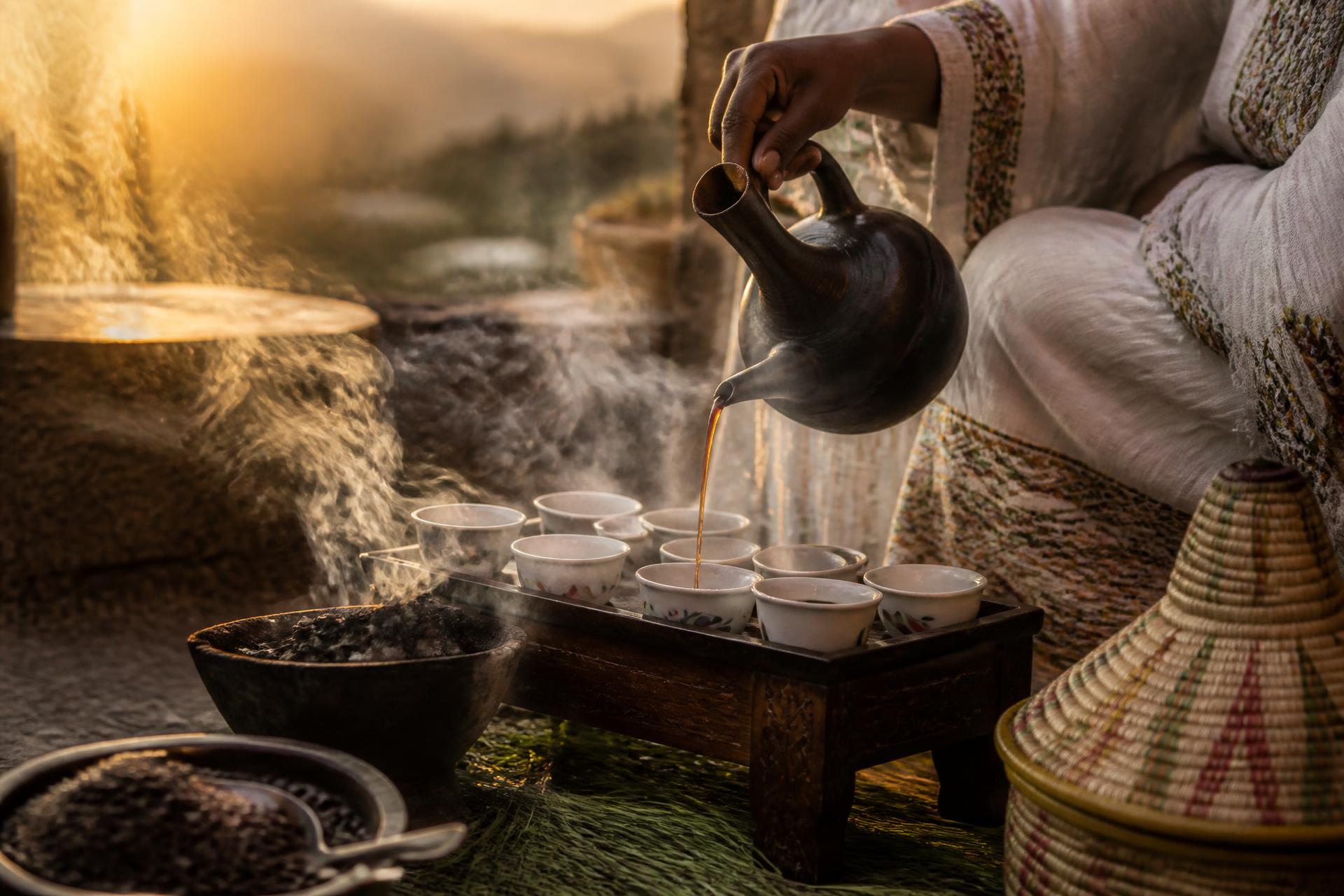
Green beans are washed and roasted over coals in front of guests, then passed around so everyone can take in the smoke. The beans are ground with a mukecha and brewed in a jebena, and served in three rounds — abol, tona and baraka — over an hour or more. Refusing the third round is considered rude.